What an AI Agent Does in a Normal Business Day
See how AI agents help with meeting notes, document checks and daily admin, with a practical starting point for Perth teams and a person in charge.
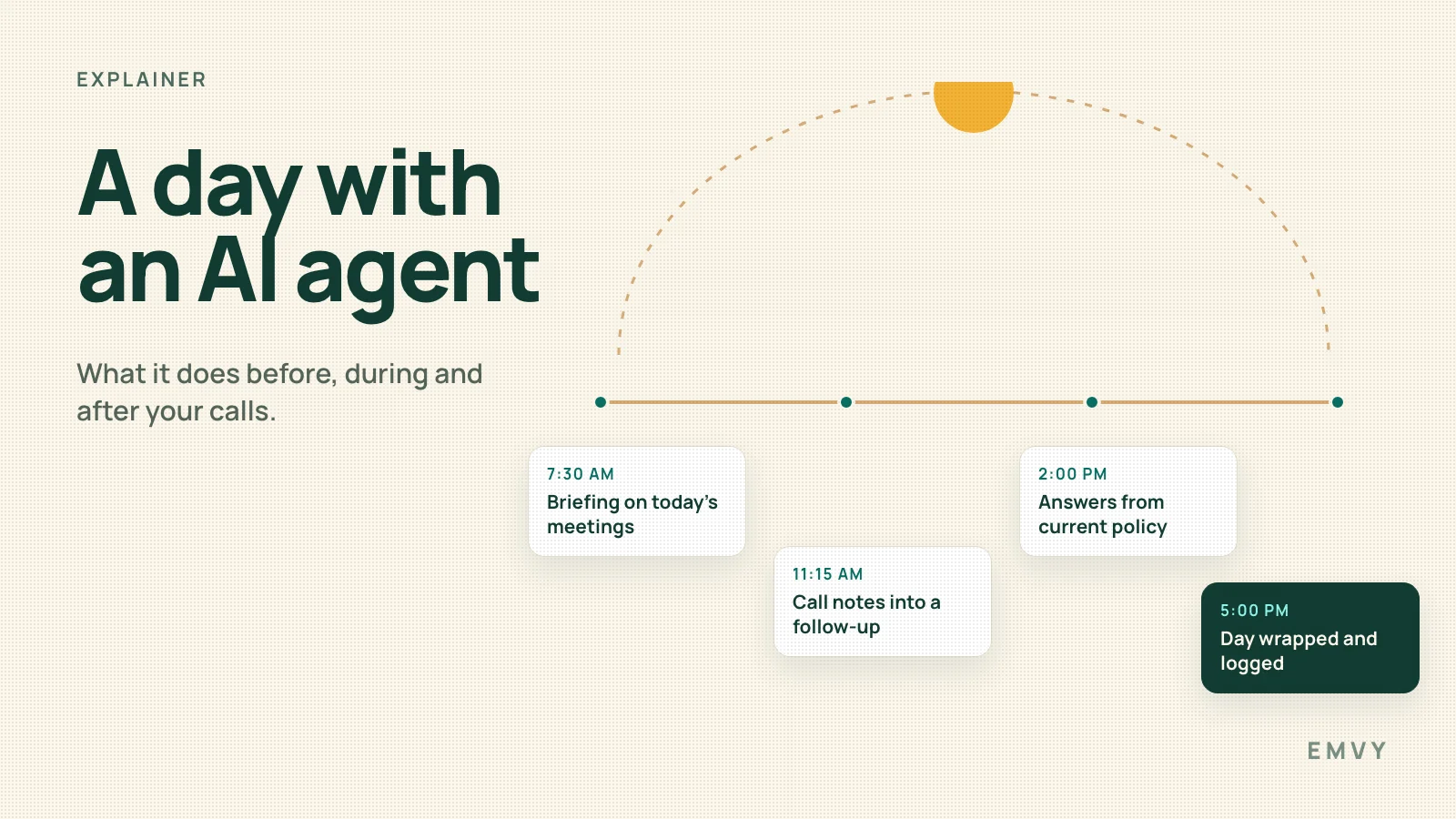
An AI agent can read the information you give it, use connected tools and work through a job, such as turning meeting notes into a task list and draft follow-up. You give it the job, the information it can use and a clear point where a person checks the result.
I’d start with the admin that keeps getting pushed into tomorrow. For a Perth office, that might be preparing meeting briefs, tidying job notes or pulling a weekly report together.
What makes it an agent?
In a normal AI chat, you ask a question and get an answer. An agent can take further steps towards the finished job: open a document, find the relevant section, prepare a file and check whether it contains what you asked for.
Each step needs a tool connection and access to the information involved. Asking it to update your calendar doesn't connect your calendar.
Hermes Agent is one example. Its official documentation describes tools, saved instructions and scheduled tasks. The useful question for an owner is which of those capabilities removes work your team already does.
Before the first meeting
I’d give the agent the meeting agenda and the relevant project notes, then ask for a short brief: decisions already made, unfinished tasks and questions that need an answer.
Each point should link back to its source. If two notes disagree, the brief should show the disagreement rather than quietly pick a version.
The finished result is a page someone can read before the call. A long summary that takes another meeting to explain hasn't helped much.
After the call
Ask for a task list with an owner and due date wherever the notes actually name them. Missing details should appear as questions for the team.
Then ask for a draft follow-up based on the decisions made. A person checks it against the notes before sending it.
I’d keep drafting and sending as separate steps. The team should be able to correct a commitment without racing an email that's already gone out.
Give it somewhere to find the current answer
At EMVY, my agents share a wiki inside an Obsidian vault. That's a collection of linked notes I can read too, with decisions and sources kept alongside the work.
That matters when the next job depends on something already decided. I don't want another enthusiastic planning session because the useful answer is sitting in a different conversation.
For your team, the equivalent might be a maintained procedures folder. Start with the current template and instructions for the selected job. Someone needs to own those documents and remove old versions from the agent's working material.
By the end of the day
For a recurring report, I'd ask the agent to prepare the same headings each time, show where the figures came from and flag missing information. The person responsible checks the figures before the report is used.
For Perth teams working with eastern-states colleagues, put the timezone beside meeting times and deadlines. A correct task with an ambiguous deadline still creates another message to sort it out.
Choose one of these jobs first. My guide to six jobs a team can hand to AI helps narrow the choice.
Do you need an agent for this?
If you're pasting a paragraph into AI and asking for a rewrite, a normal chat may be enough. If every step is fixed, a simple rule may do it more predictably.
An agent earns its place when the job needs several steps and the next step depends on what it finds. You'll also need someone to maintain its access, instructions and checks. That's part of ongoing AI support, not something to leave to whoever first set it up.
Try one repeated task and record the total time, including corrections and checking. Compare that with doing it the usual way. Keep it if the finished work is useful and the whole job is easier.
book 30 minutes and bring the admin job you'd like off your desk.
Jake